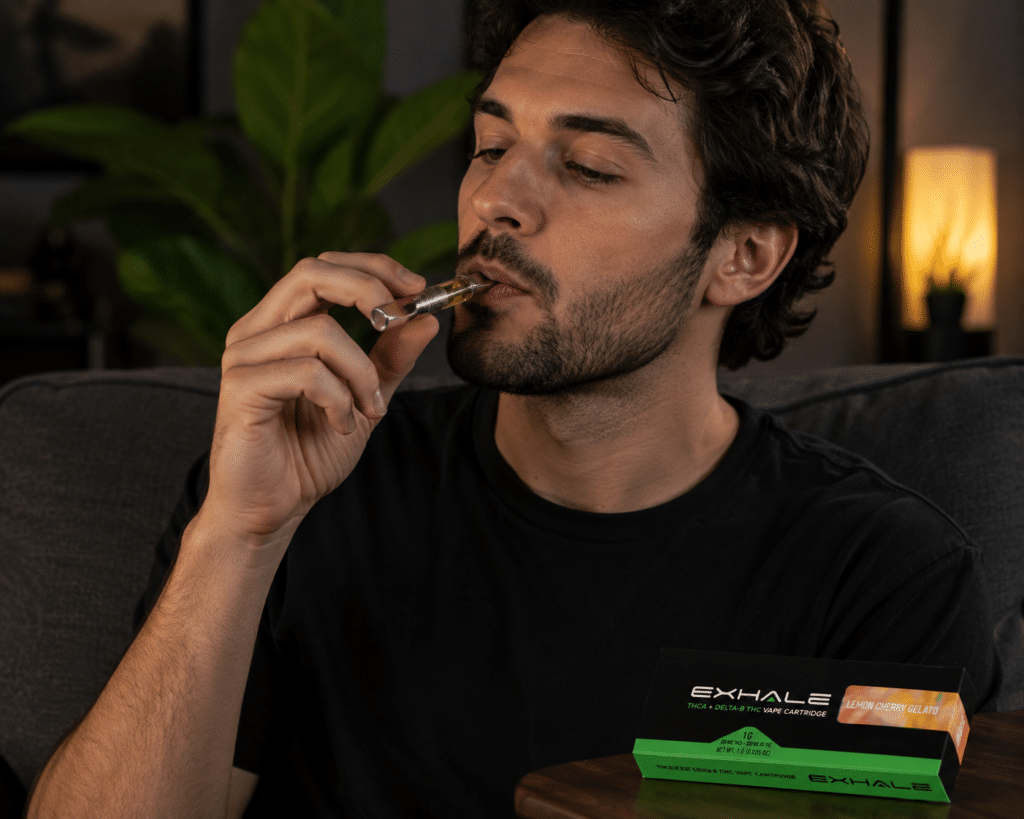
Every THCA flower guide on the internet leads with the strongest strains. The highest percentages. The most potent cultivars. And if you’re a first-timer reading those articles, the implicit message is: start with a 30%+ strain and see what happens.
That’s terrible advice.
THCA flower at 30% converts to roughly 26% THC after decarboxylation, which is equivalent to top-shelf dispensary cannabis. If you’ve never smoked flower before, or you’re transitioning from Delta 8, CBD, or gummies, that potency level will likely produce an overwhelming experience that turns your first session into your last.
The right first THCA flower sits between 18% and 22% THCA. That range delivers a genuine, noticeable cannabis experience without the intensity that makes beginners swear off flower entirely. And Exhale Wellness happens to carry multiple strains specifically in that window, which most brands treat as “mid-tier” but which are actually the ideal starting point.
Why Lower THCA Percentage Is a Feature, Not a Flaw
Here’s the math that explains everything.
A strain at 20% THCA converts to approximately 17.5% THC after the 0.877 decarboxylation factor. At that potency, a single moderate hit delivers roughly 2 to 5mg of absorbed THC (accounting for 10% to 35% inhalation bioavailability). That’s the equivalent of a standard low-dose edible per draw, enough to feel a clear effect without triggering the anxiety, paranoia, or disorientation that higher-potency flower can cause in people without established tolerance.
A strain at 36% THCA? That converts to 31.6% THC. A single hit from that flower can deliver 5 to 12mg of absorbed THC, which is a moderate edible dose in a single draw. For someone with zero tolerance, that’s the difference between “oh, this is nice” and “I need to lie down immediately.”
The endocannabinoid system in someone who has never used cannabis is fully sensitive. Every CB1 receptor is unoccupied. There’s no tolerance buffer. Low-potency flower respects that sensitivity and lets you experience cannabis the way it’s meant to feel when your receptors are fresh, which many experienced users spend tolerance breaks trying to get back to.
The Beginner Strain Lineup: Exhale’s 18% to 22% THCA Range
These three strains sit in the potency sweet spot for first-timers. Each offers a different experience profile through its terpene composition, so you can match your first strain to how you want to feel rather than just picking “whatever has the lowest number.”
Ice Cream Cookies (~20% THCA) | The Gentle Evening Starter
Type: Indica-dominant hybrid
Ice Cream Cookies is the strain most likely to give a first-timer the experience they’re hoping for: relaxed, warm, slightly euphoric, and comfortably present without being overwhelmed.
The flavor profile is creamy, sweet, and slightly doughy, like opening a bag of vanilla wafers. The terpene blend leans myrcene and caryophyllene, producing body-focused relaxation with just enough mental ease to quiet the “am I doing this right?” self-monitoring that every beginner experiences during their first session.
At approximately 20% THCA, one moderate hit produces a gentle onset that builds over 5 to 10 minutes into a comfortable calm. Two hits deepen the relaxation without tipping into sedation. Three hits approach the ceiling for most zero-tolerance users on this strain.
Best first session: Evening at home, nothing planned for 2 to 3 hours. Put on a comfort show or low-key music. Have snacks and water within reach. Take one hit, set the pipe or joint down, and wait 10 full minutes before deciding if you want more.
Grape Frosty (~20% THCA) | The Balanced Hybrid for Uncertain Beginners
Type: Balanced hybrid
If you genuinely don’t know whether you want to feel relaxed or uplifted and just want “a good vibe,” Grape Frosty is the most forgiving choice. As a true hybrid, it doesn’t pull dramatically in either direction. The effect is balanced: mentally pleasant and physically at ease, without the strong body heaviness of a pure indica or the cerebral stimulation of a sativa.
The flavor is grape-forward with fruity sweetness and a smooth, clean exhale that’s gentle on the lungs. For beginners worried about coughing fits and harsh smoke, Grape Frosty is among the smoothest in the Exhale lineup.
At ~20% THCA, the potency stays accessible. One to two hits puts most first-timers in a pleasant, comfortable headspace where conversation feels easy and sensory details (music, food, textures) feel slightly enhanced.
Best first session: Late afternoon or early evening. This strain adapts to your setting rather than forcing one. Good for a first time with a friend who can guide the experience.
Pineapple (~21% THCA) | The Daytime-Friendly Introduction
Type: Sativa-dominant hybrid
If your biggest fear about trying THCA flower is “what if I get couch-locked and can’t function,” Pineapple addresses that concern directly. The sativa-leaning genetics produce an uplifting, energetic effect that keeps you functional, talkative, and engaged rather than melted into the furniture.
The flavor is tropical and bright, genuinely pineapple-forward with citrusy undertones. The limonene-dominant terpene profile contributes to the uplifted, positive mood that makes this strain a natural fit for creative activities, light socializing, or simply exploring what “a sativa high” feels like without intensity.
At ~21% THCA, it’s slightly above Ice Cream Cookies and Grape Frosty but still well within the beginner-safe range. The sativa character means the energy might surprise people expecting heavy relaxation, so knowing what you’re getting into prevents misinterpreting “alert and uplifted” as “something’s wrong.”
Best first session: Weekend afternoon. Pair with a walk, a creative project, cooking, or casual time with friends. Have a quiet backup plan in case you want to transition to low-key mode.
The Zero-Friction Option: Start With a Pre-Roll
If you don’t own a pipe, don’t know how to pack a bowl, and aren’t ready to invest in accessories before your first experience, THCA pre-rolls remove every barrier except the lighter.
Exhale Wellness pre-rolls come hand-rolled with whole flower in hemp paper, five 1-gram joints per pack across six strains. No grinding. No packing. No technique. Light one end, draw from the other, and you’re in the experience within minutes.
For beginners, the pre-roll format also provides natural dose control. You don’t have to smoke the entire joint. Take two to three draws, set it down (extinguish the cherry by pressing it into a heat-safe surface), and wait 10 minutes. If you want more, relight. If you’re comfortable, you’re done. A 1-gram pre-roll can last a low-tolerance user three to five separate sessions.
How Much to Smoke Your First Time (The One-Hit Protocol)
The biggest mistake beginners make with flower is treating it like a cigarette: light it, puff continuously, finish it. THCA flower at even 20% is potent enough that continuous smoking produces overconsumption within minutes for someone without tolerance.
The protocol:
Take one moderate draw (2 to 3 seconds of gentle inhalation). Not a massive lung-filling rip. Not a tentative micro-puff. A normal, comfortable breath through the pipe or joint.
Set everything down. Sit comfortably. Wait 10 minutes. Effects from smoked flower arrive within 2 to 5 minutes and continue building for 10 to 15 minutes. By the 10-minute mark, you’ll have a clear sense of where the experience is heading.
If you feel comfortable and want more intensity, take one more draw. Wait another 10 minutes. Repeat until you find the level that feels right.
Most beginners find that 2 to 3 hits from a 20% THCA strain is their ceiling for the first few sessions. That’s completely normal. Your tolerance will naturally increase with experience, and the strains above 25% will be waiting for you when you’re ready.
What Your First Session Will Actually Feel Like
Setting realistic expectations prevents panic. Here’s what beginners typically report at 1 to 3 hits from a 20% THCA strain.
Within 2 to 5 minutes: A warmth or lightness settles in. Some people notice it in their face first, like a gentle flush. Others feel it in their chest or shoulders as tension releases. Mental activity shifts, thoughts feel slightly looser, less rigid.
By 10 to 15 minutes: The full effect is present. Music sounds more detailed. Colors may seem more vivid. Food tastes more interesting. Conversation flows with less self-editing. Physical sensations (sitting on a comfortable couch, a breeze, warm clothing) feel more noticeable and pleasant.
By 30 to 60 minutes: Peak effects. This is the window where most people decide whether they enjoy the experience. At 20% THCA and 2 to 3 hits, the peak is mild enough that you remain functional, conversational, and aware of your surroundings. You feel different, but you don’t feel impaired.
By 1.5 to 3 hours: Effects taper gradually. Mild tiredness or increased appetite (“the munchies”) often arrives as the experience winds down. Having snacks pre-positioned is a veteran move that beginners appreciate discovering.
What’s NOT normal at this dose: Severe anxiety, visual distortion, inability to speak or move, rapid heart rate that feels dangerous, or dissociation from reality. If any of these occur, you’ve likely consumed more than intended. Lie down somewhere safe, drink water, breathe slowly, and remember: it’s temporary and will pass within 1 to 2 hours.
When to Step Up (And What to Step Up To)
After 3 to 5 sessions at the 20% THCA range, most beginners develop enough baseline tolerance and self-knowledge to explore higher-potency strains comfortably. The THCA flower collection at Exhale Wellness spans the full spectrum.
Session 5 to 10: Try Space Junky (~22% THCA), the balanced hybrid that won No. 1 overall in Yucatan Magazine’s blind testing. It’s one small step above the starter strains, close enough in potency to feel familiar but with a more complex terpene profile that introduces you to what different strains actually taste and feel like.
Session 10 to 20: Move into the 25% to 29% range. Gelato 42 (~28.6%) and Lemon Cherry Gelato (~29.1%) are the gateway to premium-potency flower. Effects are noticeably stronger per hit, and the terpene complexity is richer. One hit may be all you need at this stage.
Session 20+: The full lineup opens up. Han Solo (~36%), Sex Panther (~40%), and the Snow Caps isolate-coated flower are available when your tolerance and experience match their intensity. These strains exist because experienced users need them. They’re not where your journey starts.
Alternatives If Smoking Isn’t for You
Some beginners want the THCA flower experience but don’t want to smoke. Two options from Exhale address this.
THCA vape carts deliver THCA distillate with strain-specific terpenes through a 510-thread battery. Same fast onset as smoking (2 to 5 minutes), smoother draw, no combustion byproducts. One small draw, wait, assess. The dose control is even more precise than flower because each draw delivers a more consistent amount.
Dry herb vaporizers heat flower below combustion temperature (350°F to 400°F), releasing cannabinoids as vapor without smoke. If you buy THCA flower and want the cleanest possible inhalation method, a portable dry herb vape pairs perfectly with the beginner strains above.
Bottom Line
The best THCA flower for beginners isn’t the strongest strain on the shelf. It’s the one that matches your zero tolerance honestly, gives you room to explore at your own pace, and produces an experience you want to repeat.
Ice Cream Cookies for a gentle evening. Grape Frosty for a balanced first try. Pineapple for a functional daytime introduction. Pre-rolls for zero-setup entry. One hit, ten minutes, and the decision to take more or stop right there.
That’s all a first session needs. Everything else, the exotic genetics, the 36% monsters, the Snow Caps, will still be there when you’re ready. Start where the flower meets your body, not where the internet says you should.
Disclaimer: THCA converts to delta-9 THC when heated and produces psychoactive effects. Products appear on drug tests. Legal under the 2018 Farm Bill when hemp-derived (0.3% or less D9 THC by dry weight). Regulatory changes take effect November 12, 2026. State laws vary. Not for anyone under 21.